
Pool Water Testing in Venice, FL
Accurate Testing. Balanced Water. Peace of Mind.
Proper pool water testing is the key to clean, balanced water that is comfortable to swim in and helps protect your pool and equipment. Liquid Assets Pool Services provides routine pool water testing and chemical balancing for homeowners in Venice, Wellen Park, Nokomis, and surrounding areas.

Accurate Testing

Balanced Water
Healthier Swimming
Why Pool Water Testing Matters
Pool water can look perfectly clear and still be out of balance. Regular testing tells us what is happening with your water chemistry so the proper adjustments can be made before small imbalances turn into larger problems.
Florida pools are especially affected by heat, intense sunlight, frequent rain, evaporation, heavy pool use, and organic debris. These factors can change water chemistry quickly, which is why consistent testing is an important part of routine pool care.
Maintaining properly balanced water can help keep your pool clear, improve swimmer comfort, reduce the likelihood of algae, and protect pool surfaces and equipment from scale or corrosion.
The Benefits of Proper Water Balance

Safer, healthier swimming for your family
Prevents algae and cloudy water
Protects pool surfaces and equipment
Saves time and money on future repairs
What We Test and How Often

Weekly Testing
Tested Weekly:
- pH
- Alkalinity
- Chlorine
Monthly Testing
Tested Monthly:
- Calcium Hardness
- Cyanuric Acid (Stabilizer)
- Salt (for saltwater pools)
- Phosphates – tested periodically when appropriate
Our Pool Water Testing Process
1
Test The Water
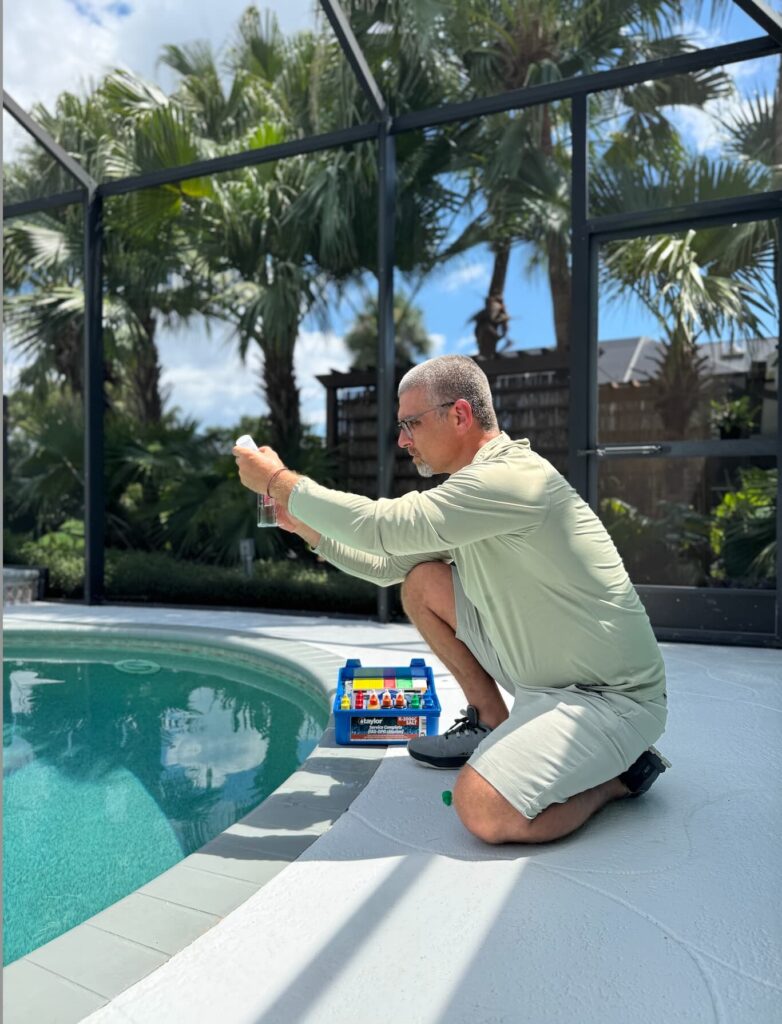
We collect a water sample and test the appropriate chemistry levels using professional pool testing reagents and equipment.
2
Review the Results
We evaluate the readings to determine whether the water is properly balanced and identify anything that needs attention.
3
Analyze & Adjust
We add the appropriate pool chemicals as part of service to bring the water back toward the proper range.
4
Report & Communicate
Our service reporting with The Pool Junction App helps keep you informed about your pool and the care provided during your visit.
What Happens When Water is Out of Balance

Cloudy or dull-looking water
Algae growth
Reduced effectiveness of chlorine
Corrosion of pool surfaces or equipment
Staining or discoloration
Scale or calcium buildup
POOL TESTING IS ONLY PART OF THE PICTURE
Balanced water works together with proper circulation, filtration, cleaning, and equipment operation. Our weekly pool service takes a whole-pool approach by combining water testing and chemical balancing with routine cleaning and equipment checks.
If we notice something during service that may be affecting your water quality or pool performance, we will communicate it to you so it can be addressed.
WHY FLORIDA POOLS NEED CONSISTENT WATER TESTING
Pool chemistry in Southwest Florida can change quickly. Heavy summer rain can dilute chemicals, intense sun can affect chlorine levels, warm temperatures can encourage algae growth, and evaporation can concentrate minerals in the water.
That is one reason we test and monitor your water as part of ongoing weekly pool service rather than waiting until the water looks cloudy or a problem becomes obvious.
Frequently Asked Questions
Residential pools should be tested regularly because heat, sunlight, rain, evaporation, and pool use can change water chemistry. As part of our weekly pool service, we routinely test key water chemistry levels and make adjustments as needed.
We routinely monitor chlorine, pH, and alkalinity. We also monitor calcium hardness, cyanuric acid, salt levels for saltwater pools, and other chemistry such as phosphates when appropriate.
Cloudy water can have several causes, including filtration issues, imbalanced pH or alkalinity, high calcium levels, algae, debris, or circulation problems. Chlorine is important, but it is only one part of overall pool water balance.
Yes. Saltwater pools still require regular testing and balancing. In addition to standard water chemistry, salt levels and the operation of the salt chlorine generator need to be monitored.
Yes. Heavy Florida rain can dilute pool chemicals and affect pH, alkalinity, sanitizer levels, and overall water balance. This is one reason consistent testing is especially important during the rainy season.
Home testing kits can provide useful information, but accurate pool care requires understanding how the different chemistry levels interact and knowing what adjustments to make. Professional routine testing also allows changes to be tracked over time as part of overall pool maintenance.
Ready for Clear, Balanced, Worry-Free Pool Water?
Let Liquid Asset Pool Services take the guesswork out of pool care.